Sanpete Steel: Utah’s Full-Cycle Structural Steel Partner
If you work in commercial
construction anywhere in Utah—or across the Intermountain West—there’s a strong
chance you’ve walked past, worked under, or driven by a frame that Sanpete
Steel fabricated and set. From cultural landmarks and university facilities to
medical labs, office towers, and athletic centers, the Moroni-based firm has
become one of the region’s go-to names for complex structural and miscellaneous
steel packages. What follows is an in-depth look at Sanpete Steel’s history,
services, capabilities, typical project workflow, and the role it plays in the
Western U.S. construction market.
A
brief history rooted in central Utah
Sanpete Steel opened its doors in
1994, starting in a small facility in Fairview with an operation that leaned
heavily on outdoor production. Four years later, growth pushed the team to its
current home in Moroni, where expanded shop space and yard capacity better
matched rising demand. From the beginning, the company adopted a clear
performance mantra—“Done Right and On Time”—and oriented its systems, staffing,
and scheduling around that expectation. Over the ensuing decades, Sanpete Steel
has stayed focused on structural steel fabrication and erection while
modernizing processes and tooling to keep pace with tighter schedules, advanced
connection requirements, and higher expectations for quality documentation.
The firm qualifies as a Small
Business and carries HUBZone certification, which can be consequential on
public work and federally influenced procurements. Licensure in Utah and
Nevada—and credentials to support work across the Intermountain West and as far
as Alaska—reflects a pragmatic growth strategy: build deep experience in the
home market while staying mobile enough to follow clients and project teams to
neighboring states when the fit is right.
What
Sanpete Steel actually does
Sanpete Steel positions itself as a
full-package structural steel partner. In practice, that means the company is
comfortable entering a project at multiple points along the delivery spectrum:
- Budget pricing and preconstruction support. Estimators provide early, limited-information budgets
that help general contractors and owners validate feasibility and funding.
At this stage, value engineering suggestions—such as alternate connection
details or member rationalization—can reduce weight, shop hours, or field
time without compromising performance.
- Design-build collaboration. On integrated teams, Sanpete Steel engages early to
align architectural intent, structural engineering, fabrication realities,
and erection sequencing. The goal is to front-load constructability,
minimize costly RFIs, and compress the overall delivery timeline.
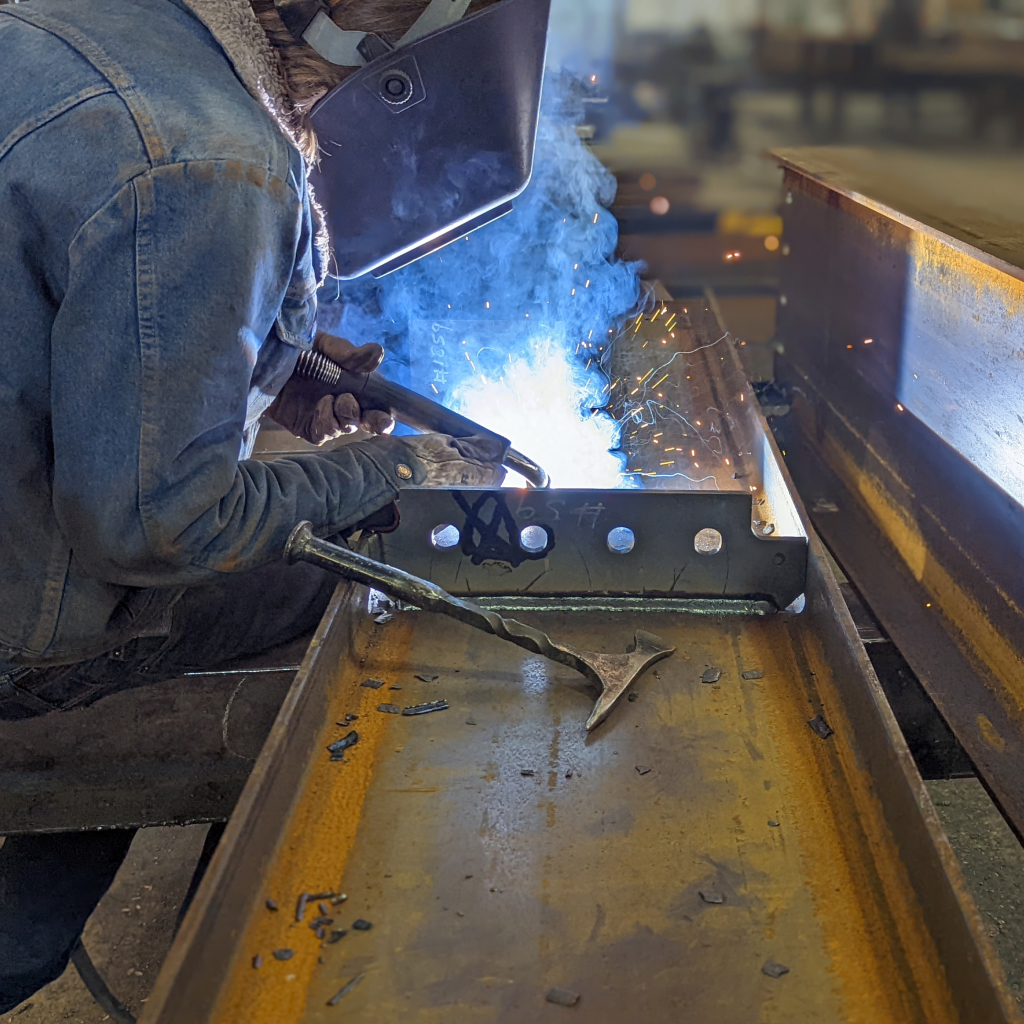
- Shop fabrication.
The core of the business is cutting, drilling, coping, welding, and
finishing beams, columns, trusses, HSS, and plate for shipment to site.
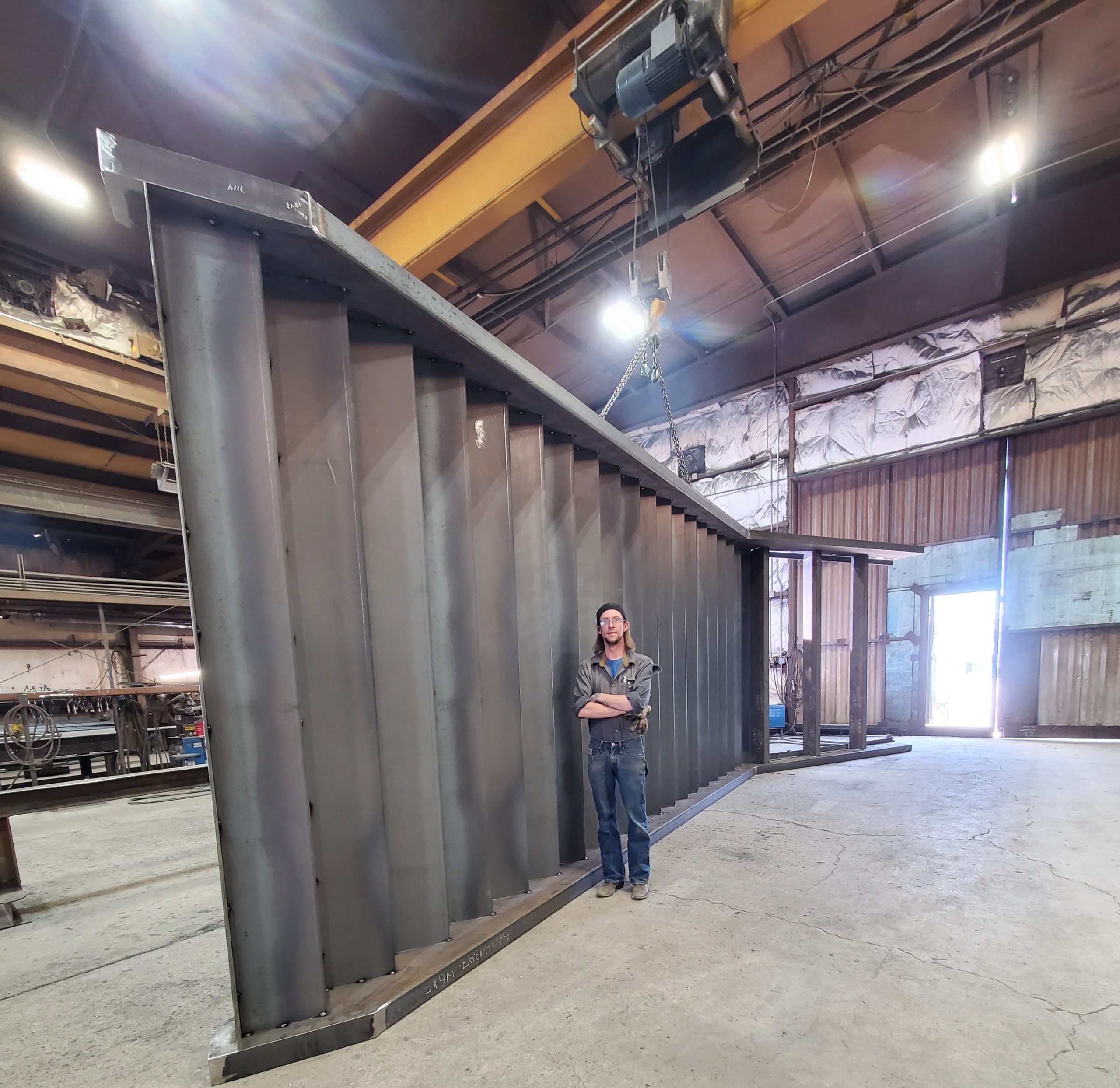
“Miscellaneous” work—stairs, rails, ladders, and canopies—often rides
alongside the main frame so the GC can keep a single point of
accountability.
- Field erection and installation. Dedicated erection crews, cranes, and rigging bring
the shop output to life. The company sequences deliveries, manages bolt-up
and weld-out, and coordinates with concrete, envelope, and MEP trades to
maintain the critical path.
That cradle-to-installation approach
allows Sanpete Steel to own schedule risk inside its scope and reduces the
handoffs that can derail a steel package.
Markets
and project types
Although Sanpete Steel is deeply
associated with Utah’s building boom, its portfolio spans a broad cross-section
of use types:
- Arts and culture.
Landmark performance venues demand long spans, difficult geometry, and
rigorous vibration criteria. The company’s work on high-profile theaters
showcases the team’s comfort with architecturally exposed structural steel
(AESS) and complex roof truss assemblies.
- Higher education and K-12. Classroom buildings, business schools, student life
centers, and housing projects require fast turnarounds aligned to academic
calendars, along with the change management discipline that comes with
donor-driven scope shifts.
- Healthcare and labs.
Medical and research spaces introduce heavier loading, strict deflection
limits, and dense MEP congestion. These projects reward early steel
detailing inside coordinated BIM models to pre-solve conflicts between
frames, embeds, and overhead systems.
- Office and commercial. Multi-story office cores, mixed-use podiums, and
campus buildings are the steady heartbeat of the portfolio—high tonnage,
repeatable workflows, and room to optimize shop throughput.
- Civic and recreation.
Fitness centers, municipal facilities, and athletic complexes bring
wide-open floorplates, long-span roofs, and demanding erection logistics
around ongoing public activity.
This variety matters because it
keeps the shop balanced across different tonnage profiles, connection types,
and finish requirements, smoothing workloads and sustaining a veteran field
workforce.
Capabilities
that matter on real jobs
Every fabricator can list saws,
drills, and welding stations. What differentiates execution on a jobsite are the
intangibles that flow from systems and culture. For Sanpete Steel, several
themes stand out:
- Detailing integrated with constructability. Whether detailing is performed in-house or in
coordination with a partner, the company emphasizes connection choices and
splice locations that shorten shop hours and speed field assembly. The
earlier the team is involved, the more chances there are to eliminate
rework buried in drawings.
- QA/QC discipline.
Traceability from mill cert to member, welder qualifications aligned to
procedure, and inspection sign-offs at key milestones keep projects
compliant with AISC/AWS expectations and spec language. The payoff is
fewer NCRs and smoother special inspections.
- Schedule realism.
The “Done Right and On Time” ethos isn’t marketing fluff; it shows up as
conservative lead-time assumptions on long-span shapes, honest shop hour
loading, and proactive communication with GCs when upstream design
decisions threaten the steel critical path.
- Erection logistics.
In dense urban sites—or school campuses with active students—erection
planning is a craft. Sequenced deliveries, crane walks, and temporary
stability plans are coordinated to protect safety and keep other trades
flowing.
- Design-build literacy. Being a member of the design-build community isn’t
just about attending conferences. It’s about speaking the language of
structural engineers, understanding the owner’s ROI calculus, and
proposing connection strategies that achieve performance at lower labor
and material cost.
Representative
projects and what they illustrate
A glance at Sanpete Steel’s public
portfolio highlights several instructive case studies:
- Hale Centre Theatre (Sandy, UT). A marquee cultural project with a substantial steel
package measured in the thousands of tons. The job underscores the firm’s
capacity for large-tonnage, high-visibility work where schedule and fit
are non-negotiable.
- ARUP Laboratories (Salt Lake City, UT). Nearly two thousand tons of structural and
miscellaneous steel for a mission-critical lab environment. Tight
tolerances, mechanical integration, and heavy floor loads showcase
competence in healthcare and research facilities.
- UVU School of Business (Orem, UT). A multi-level academic building with more than 1,700
tons of steel, reflecting the firm’s deep bench on higher-ed work and
comfort with long runs of repetitive framing alongside architecturally
exposed elements.
- Alta High School Performing Arts Center (Sandy, UT). A mid-hundreds ton project that won regional
awards—useful as an example of misc steel integration (stairs/rails) with
larger truss and roof elements.
- American Fork Tower (American Fork, UT). An office/vertical commercial assignment illustrating
how the team manages core and shell frames where elevator/stair cores,
moment frames, and slab edge coordination drive detailing decisions.
Across these jobs, the through-line
is coordination: detailers resolving conflicts before they hit the shop, the
shop packaging loads to match crane picks, and the field managing safety and
productivity simultaneously.
How
a typical Sanpete Steel project flows
Although every build is unique, most
steel packages pass through familiar phases:
- Preconstruction and budgeting. The estimator reviews schematic or DD-level drawings,
clarifies assumed load paths and connection types, and issues an
order-of-magnitude cost per ton with allowances for misc metals. Where
possible, alternatives are proposed—e.g., swapping moment frames for
braced frames to reduce field welding and cut costs.
- Award and kickoff.
Upon award, the team locks a procurement plan (long-lead shapes, plate,
embeds, headed studs), defines RFI priorities, and aligns a submittal
schedule with the GC’s master plan.
- Detailing and approval. Shop and erection drawings are produced, reviewed, and
approved. BIM coordination resolves penetrations, embeds, and clashes with
MEP/HVAC. Connection design is sealed where delegated.
- Fabrication.
Material is received and checked for heat numbers and certs. Members move
through a CNC drill line and saws; coping, milling, and weld prep follow.
Welders work to qualified procedures (e.g., FCAW or SAW for high
deposition); pieces are blasted and primed or galvanized as specified.
- Shipping and erection. Sequenced loads match the erection plan. Field crews
set columns, bolt beams, and add diaphragms and bracing to lock stability.
Miscellaneous items arrive to align with interiors and life-safety
schedules. Daily huddles coordinate with other trades.
- Closeout.
Punchlists, as-builts, and final mill cert packages close the loop. The GC
signs off with special inspectors, and the owner turns the page to
interiors and commissioning.
Why
Utah’s builders keep calling
Utah’s construction market has
expanded rapidly over the last decade. With more cranes on skylines from Logan
to St. George, steel packages have compressed schedules and rising complexity.
Sanpete Steel’s market durability traces back to three practical advantages:
- Proximity and relationships. Being headquartered in Moroni places the shop within a
few hours of the Wasatch Front’s densest job clusters. Longstanding
relationships with major Utah GCs and CMs mean faster issue resolution and
mutual trust when plans shift.
- Range of tonnage.
The company is comfortable delivering anything from sub-500-ton school
additions to multi-thousand-ton campus and cultural assignments. That
elasticity allows GCs to keep the same partner across diverse portfolios.
- Total-package accountability. Fabrication plus erection under one roof minimizes
scope gaps. When the same organization that welded the beam is also
hanging it, problems resolve inside a single chain of command.
Risk
management and safety
Structural steel is unforgiving
work; safety culture separates sustainable erectors from those who burn out.
Sanpete Steel’s risk posture shows up in methodical erection planning,
qualified welding, and an inspection regimen aligned to code and project specs.
In the field, fall protection, lifting plans, and daily pre-task planning are
standard. In the shop, equipment guarding, crane inspections, and welder
certifications keep both people and product on spec. The payoff is predictable:
fewer delays, fewer re-fabrications, and steadier cost control.
Looking
ahead: technology and talent
Two forces will shape every
fabricator in the next five years: digital coordination and workforce
depth. On the digital side, tighter BIM integration (model-based detailing,
automated CNC downloads, clash-free embeds) shrinks RFI cycles and field
rework. In the shop, investments in automated drill lines, robotic welding, and
material handling raise throughput and reduce ergonomic strain. In the field,
model-linked erection plans cut mis-picks and speed up bolt-up.
Talent is the harder nut. Journeyman
fitters, certified welders, and experienced ironworkers don’t appear overnight.
Companies that retain veterans and build apprenticeships will outperform peers
as the construction cycle ebbs and flows. Sanpete Steel’s longevity in Utah
positions it well: steady project flow, an established brand, and repeat
relationships give it the runway to train and keep skilled people.
What
owners and GCs should expect
If you’re scoping a project that
will live or die on steel performance, here’s what Sanpete Steel typically
brings to the table:
- Early clarity.
Clear budgets with stated assumptions and alternates.
- Constructability.
Connection choices that reduce shop and field hours.
- Documentation.
Submittals and QA packages that satisfy inspectors the first time.
- Schedule protection.
Procurement plans accounting for long-lead shapes and coatings.
- Field execution.
Safe, sequenced erection that respects surrounding trades.
- Follow-through.
Closeout materials organized and delivered without drama.
In a market where cost certainty and
schedule discipline are the ultimate currencies, those habits are often the
difference between a steel package that quietly delivers and one that creates
ripple effects across every downstream trade.
Bottom
line
Sanpete Steel is, at heart, a
regional specialist with big-project chops. It grew from a modest outdoor
operation to a certified fabricator-erector with a resume full of award-winning
cultural venues, major university buildings, sophisticated labs, and everyday
commercial frames. The company’s identity is simple and stubbornly practical:
commit to the schedule, hit the quality marks, and keep the field safe. For
owners and builders working along the Wasatch Front and beyond, that
combination has real, measurable value—frame after frame, job after job.
Sanpete Steel Corporation
685 E Main St
Moroni, UT 84646
(435) 436-8310
Follow us: Tumblr | WordPress | Gravatar | Disqus | Google Sites | Youtube | About.me | Wix


No comments:
Post a Comment